Gisela Albrecht · 30 September 2026
University Laboratories Investigate Maple Sap as Sustainable Coolant in Forge Operations
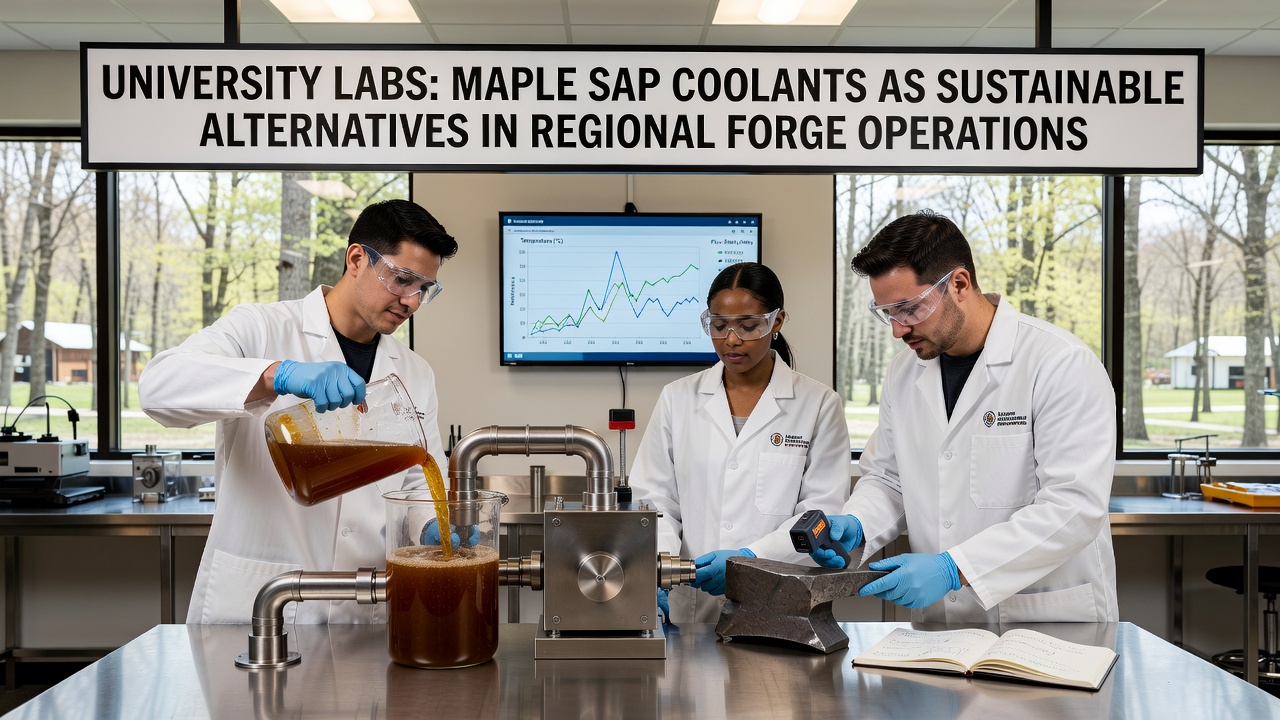
University research teams across multiple regions have begun systematic evaluations of maple sap as an alternative coolant in forge operations, and these efforts focus on reducing reliance on synthetic fluids while leveraging locally available natural resources. Data from initial trials indicate that maple sap maintains effective heat transfer properties during metalworking processes, which often involve temperatures exceeding 800 degrees Celsius, and the approach aligns with broader goals of minimizing industrial waste streams in smaller scale facilities.
Traditional Coolants and Emerging Sustainability Pressures
Forge workshops have long depended on water-based emulsions or petroleum-derived coolants to manage thermal stress on tools and workpieces, yet these substances frequently introduce environmental challenges through disposal requirements and potential groundwater contamination. Studies conducted at institutions in North America and Europe show that conventional options contribute to higher carbon footprints when sourced and transported over long distances, and regional operators face increasing regulatory scrutiny on chemical usage as outlined in reports from the European Environment Agency. Maple sap, harvested from Acer species during late winter and early spring, offers a renewable substitute that contains approximately 98 percent water along with trace sugars and minerals that may enhance lubricity without additional additives.
Properties of Maple Sap in High-Heat Applications
Analyses performed in university laboratories reveal that untreated maple sap exhibits thermal conductivity comparable to distilled water while providing slight viscosity benefits from natural oligosaccharides, and these characteristics allow it to absorb and dissipate heat during quenching cycles more evenly than plain water alone. Researchers have documented reduced oxidation rates on carbon steel surfaces when sap-based coolants are applied, and the material's pH range near 6.5 to 7.0 supports compatibility with common forge alloys. Seasonal availability presents logistical considerations since collection peaks between February and April, yet storage techniques involving refrigeration or concentration extend usability throughout the year for participating workshops.
Key Research Initiatives Underway
Teams at several universities have established pilot programs that integrate maple sap extraction with on-site forge testing, and one project launched in 2024 examines fluid performance across repeated cycles to measure degradation and filtration needs. In September 2026, findings from these multi-year experiments will be presented at an international materials processing symposium, where participants expect to share quantitative data on energy consumption reductions and tool longevity improvements. Observers note that collaboration between forestry departments and mechanical engineering faculties has accelerated protocol development, since maple stands often exist within 50 kilometers of many Central European and northeastern North American forge sites.
Additional trials incorporate sensors to track temperature gradients in real time, and early datasets suggest that sap coolants lower peak tool temperatures by 15 to 20 percent compared with water-only controls under identical hammer press conditions. These measurements come from standardized test rigs that replicate regional production schedules, which typically involve batches of agricultural implements or architectural hardware.
Regional Forge Operations and Resource Integration
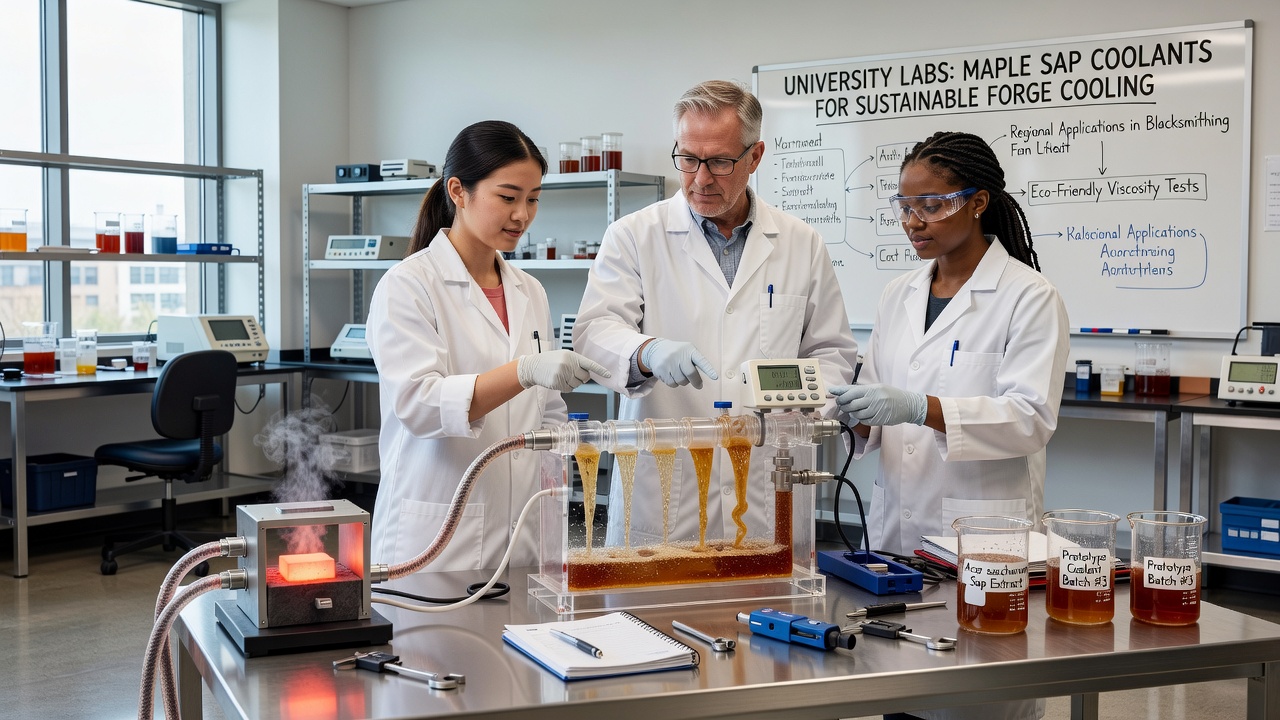
Workshops in areas with established maple production infrastructure have begun incorporating sap collection into their supply chains, and this integration reduces transportation emissions associated with commercial coolant delivery. According to figures from Natural Resources Canada, annual maple sap yields in suitable climates average 30 to 50 liters per tap, providing sufficient volume for small to medium forges when supplemented by storage. Participants report that spent coolant can be returned to agricultural fields as a mild soil amendment after filtration removes metal particulates, thereby closing a material loop that synthetic alternatives rarely achieve.
Implementation varies by scale, with some facilities diluting concentrated sap extracts during peak summer operations when fresh collection is unavailable, and others partner directly with local producers to ensure consistent supply. Equipment modifications remain minimal since existing pump and nozzle systems handle the fluid's viscosity without significant retrofitting, and maintenance intervals align closely with those required for water-based systems.
Conclusion
Ongoing university investigations continue to refine application parameters for maple sap coolants, and the collected evidence supports their viability as a regionally sourced option that addresses both performance and environmental criteria in forge settings. Further data collection through 2026 and beyond will clarify long-term economic factors and scalability across diverse geographic zones where maple resources and metalworking traditions intersect.