Yves Hughes · 2 September 2026
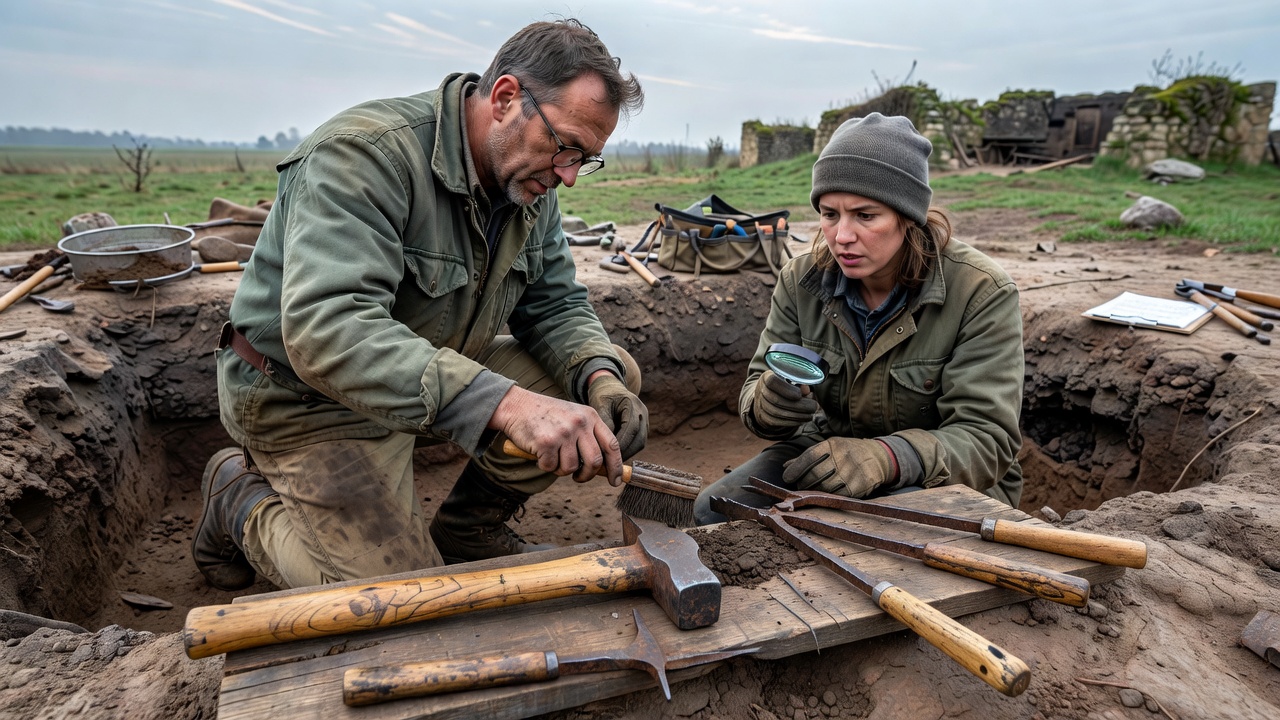
Polish archaeologists from the University of Warsaw have revealed a collection of tools featuring maple wood handles at a recently excavated 18th-century forge site in southern Poland. The discovery sheds light on the materials used by blacksmiths during that era and offers fresh perspectives on historical craftsmanship practices.
Details of the Find
The site near the Carpathian Mountains was excavated over two years using ground-penetrating radar and careful stratigraphic methods. Researchers recovered hammers, tongs and chisels with preserved maple handles. Carbon dating places the artifacts in the mid-1700s when Polish metallurgy expanded rapidly. Maple was selected for its durability shock resistance and local abundance in regional forests.
Wood analysis reveals precise growth rings matching 18th-century climate records. The handles demonstrate skilled integration of woodworking and metalworking. Anaerobic soil conditions aided preservation allowing microscopic study of tool wear patterns that indicate daily forge operations.
Significance for Historical Education
The find carries direct value for Maple Forge Education programs. Students examine sustainable local resource use in traditional forging. Curricula will incorporate the artifacts to illustrate 18th-century industry and material choices. Virtual reality modules based on the site will enable global learners to explore the workshops interactively.
Workshops teaching replication of the tools with period techniques are planned. The artifacts will enter museum displays to support public heritage education. Further research compares the maple tools with European counterparts challenging prior assumptions that oak dominated Polish forges. Preservation protocols ensure continued access for scholars and students studying historical techniques and cultural knowledge.